Floreana Island, Galapagos
Mysteries, Pirates, and Marine Wonders
Floreana Island (also known as Charles or Santa Maria) is perhaps the most intriguing island in the Galapagos. Located in the southern part of the archipelago, it is one of the four inhabited islands, home to a small community of about 150 people.
While its wildlife is spectacular, Floreana is world-famous for its rich human history, involving 18th-century pirates, whalers, and a bizarre 1930s “Galapagos Affair” mystery that remains unsolved to this day.
A History of Mystery and Tradition
Unlike the pristine wilderness of other islands, Floreana’s identity is tied to its freshwater springs and human settlers.
- The Galapagos Affair: In the 1930s, a self-proclaimed Baroness and her lovers, along with German settlers (the Ritters and the Wittmers), moved to the island. Their presence led to a series of mysterious disappearances and deaths that still fascinate historians.
- Post Office Bay: Since 1793, whalers used a wooden barrel as an unofficial post office. This tradition continues today: travelers leave postcards without stamps, and others hand-deliver them if they live near the destination.
The First Settler: The Irishman Patrick Watkins became the first resident of the Galapagos here in 1807, living in solitude and trading vegetables for rum with passing ships.


Key Visitor Points
Cormorant Point
Despite the name, there are no cormorants here, but it offers two distinct beaches:
- Green Sand Beach: Contains olivine crystals that give the shore a unique olive-green tint.
- Flour Beach: A powdery white beach made of fine coral, where Green Sea Turtles nest from December to May.
- The Lagoon: One of the best places in the archipelago to see Greater Flamingos.
Devil’s Crown (Corona del Diablo)
An eroded volcanic cone that is widely considered the best snorkeling site in the Galapagos.
- The Experience: The current carries you through the center of the crown, where you can see white-tip reef sharks, rays, sea turtles, and massive schools of tropical fish.
- Note: Recommended for confident swimmers due to strong currents.
Asilo de la Paz (Peace Haven)
A highland site rich in history and nature.
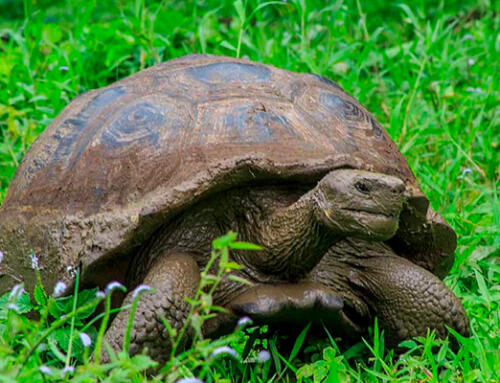
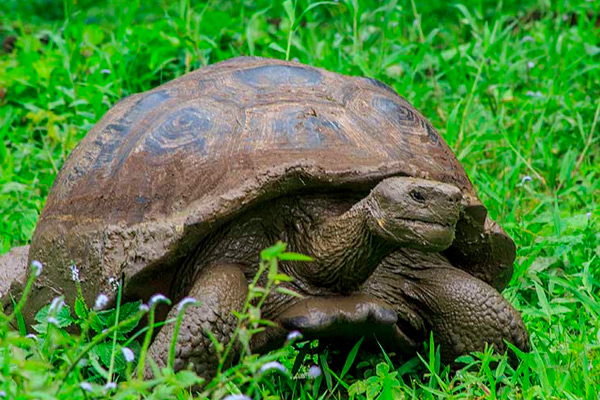
- What to see: The freshwater spring that allowed human life, “Pirate Caves” carved into the rock, and a giant tortoise corral.
- Flora: The area is surrounded by lush Scalesia forests, home to several species of Darwin’s Finches.
Champion Islet
A small rocky outcrop near the coast.
- Conservation: It is one of the last two habitats of the critically endangered Floreana Mockingbird.
- Snorkeling: Exceptional visibility to see playful sea lions and hammerhead sharks.
Wildlife of Floreana
| Species | Where to find them |
| Greater Flamingos | The saltwater lagoon at Cormorant Point. |
| Green Sea Turtles | Nesting at Flour Beach (Jan–Mar) and swimming in Devil’s Crown. |
| Floreana Mockingbird | Only visible (from the boat) at Champion or Gardner Islets. |
| Galapagos Penguins | Often seen darting through the water near Post Office Bay. |
| Sea Lions | A large, friendly colony at Black Beach in Puerto Velasco Ibarra. |
Quick Facts for Travelers
| Feature | Details |
| Population | ~150 inhabitants (Puerto Velasco Ibarra) |
| Human History | Pirates, Whalers, and the “Baroness” Mystery |
| Best Snorkeling | Devil’s Crown & Champion Islet |
| Unique Flora | Scalesia forests and over 48 endemic plant species |
| Access | Cruise itineraries or Day Trips from Santa Cruz Island |
Frequently Asked Questions
What is the “Post Office Bay” tradition?
It is a 200-year-old postal system. You leave a postcard (no stamp needed) in a wooden barrel and check the pile for any cards addressed to a place near your home. If you find one, you take it and deliver it by hand when you return.
Can I stay overnight on Floreana?
Yes, Floreana is one of the few islands with “Inhabited” status. There are small, family-run lodges like Pension Wittmer, owned by descendants of the original 1930s settlers.
Is Devil’s Crown dangerous?
Devil’s Crown is an advanced snorkeling site due to strong currents. Access is strictly regulated: it can only be visited via an expedition cruise and is not available on day tours. Per National Park rules, you must be accompanied by a certified naturalist guide at all times. It is recommended for confident swimmers comfortable in open waters.
Why is the sand green at Cormorant Point?
The green tint comes from olivine crystals, which are minerals expelled during volcanic eruptions. When the lava erodes, these heavy crystals remain on the beach, creating the “Green Sand Beach.”
How to Visit Floreana Island
- Cruises: Most southern itineraries include a full day at Floreana.
- Land-Based: You can take a speedboat (lancha) or a guided day tour from Puerto Ayora (Santa Cruz). The journey takes about 2 to 2.5 hours each way.