

The Ocean Ambassadors: Social Dynamics of the Galapagos Sea Lion
Coastal Sentinels of the Volcanic Shorelines
No marine mammal captures the playful, inquisitive, and welcoming spirit of the enchanted islands quite like the charismatic residents that dominate the sandy beaches and rocky coastlines of the archipelago. Observing a Galapagos sea lion sunbathing on a public park bench or gliding effortlessly through a turquoise cove is a defining highlight for any maritime journey, showcasing a unique lack of fear toward humans that is characteristic of island isolation. These agile carnivores, which are a distinct endemic species separate from their larger California cousins, have perfectly adapted to the warm equatorial sun and the cool, nutrient-rich undercurrents that rise from the depths of the Pacific Ocean.
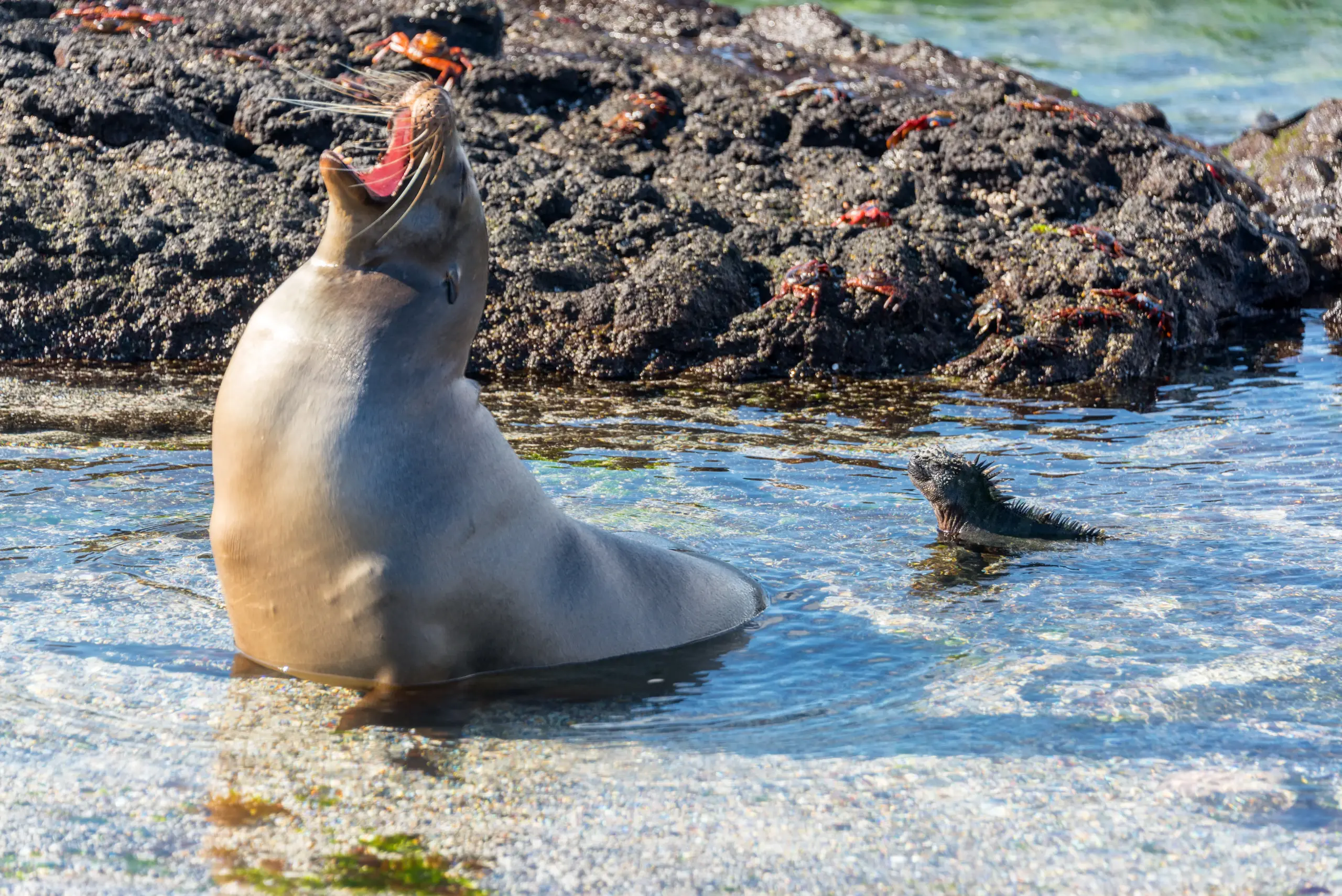
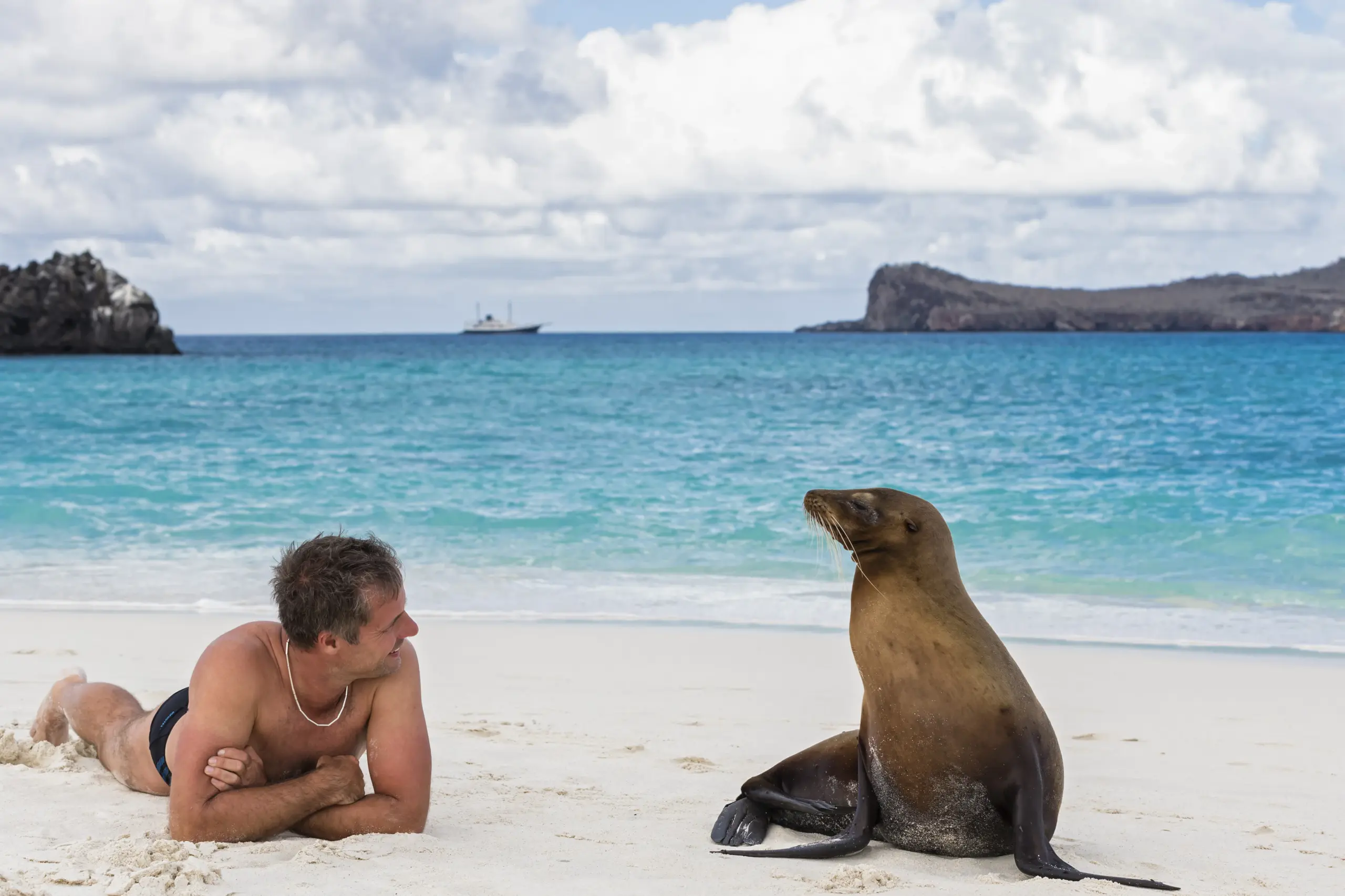
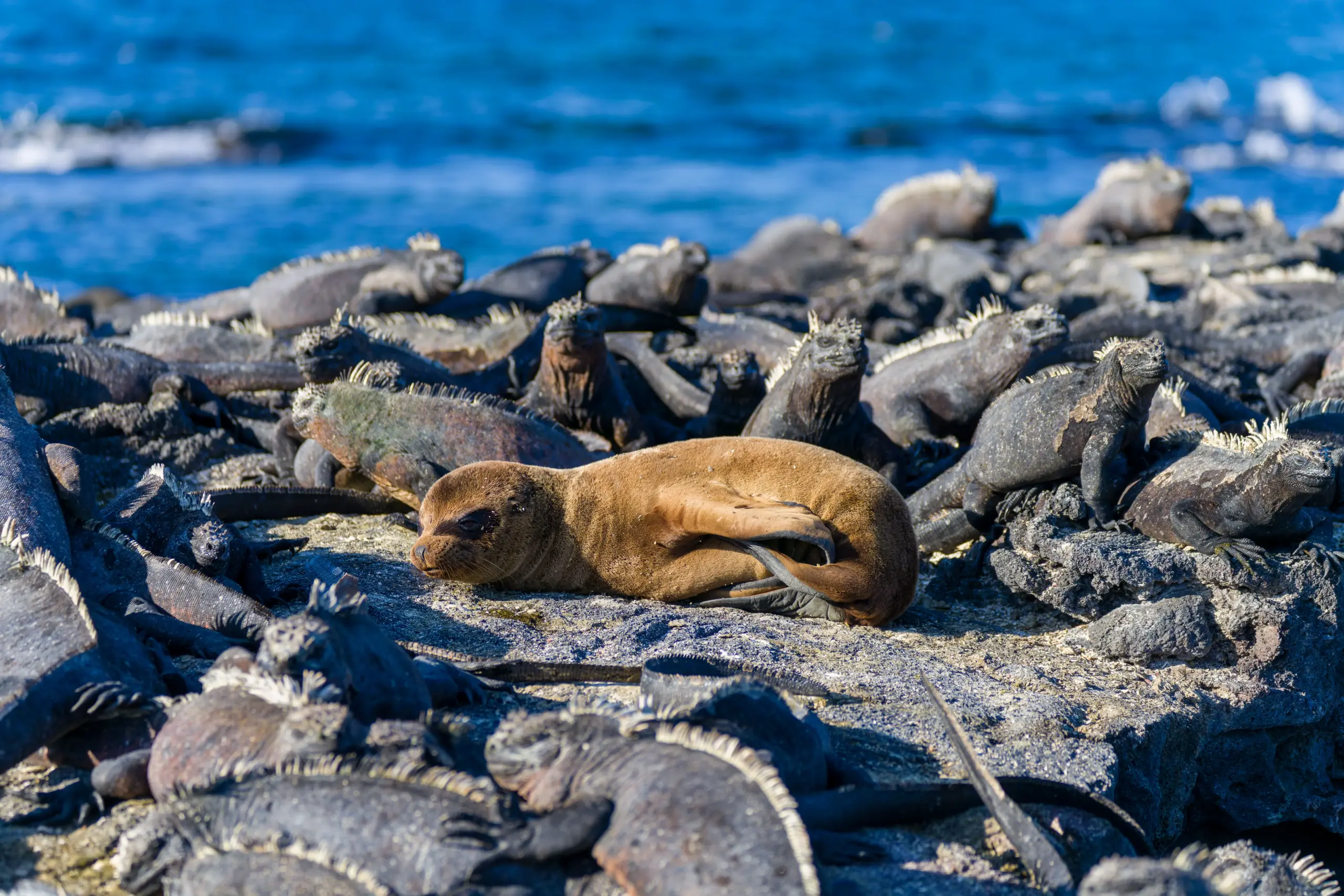
To discover how these vocal mammals fit into the broader ecological network of the region, consulting our comprehensive overview on the ultimate guide to Galapagos island animals will provide you with deep scientific context before your coastal exploration begins.
While they appear relaxed and clumsy while resting on dry land, the physical design of the Galapagos sea lion transforms into a masterpiece of hydrodynamic efficiency the moment they submerge beneath the waves. Their streamlined bodies, powerful front flippers, and flexible skeletal structure allow them to dive to depths of over three hundred meters and execute rapid, acrobatic twists to pursue fast-moving schools of sardines and multi-colored reef fish. This marine agility is critical for avoiding large pelagic predators such as sharks and killer whales, which patrol the deeper channels separating the volcanic islands. Understanding these daily marine challenges highlights the importance of responsible coastal tourism, ensuring that human interactions along the shoreline never interfere with their vital hunting and resting cycles.
Harems and Territory: The Complex Social Hierarchy of the Coast
The social structure of a typical beach colony is governed by intense seasonal competition, where dominant alpha males establish strict territorial boundaries to protect their collection of breeding females. A male Galapagos sea lion will aggressively patrol his stretch of sand, barking continuously to warn rivals and engaging in fierce physical battles to defend his status against roaming bachelor males. This demanding guard duty requires immense energy, forcing the dominant bull to remain on the beach for weeks without entering the ocean to hunt, which eventually leads to exhaustion and weight loss. When the alpha male must finally return to the sea to feed, a younger, stronger challenger will quickly claim the territory, ensuring a constant rotation of genetic leadership within the colony throughout the reproductive season.
FAQs: Navigating the World of Marine Mammals
How can travelers distinguish between a sea lion and a fur seal when exploring the coast? Although they belong to the same evolutionary family of eared seals, a Galapagos sea lion can be easily distinguished by its larger size, elongated snout, and smooth, short fur that appears dark brown or tan when dry. In contrast, the Galapagos fur seal features a much wider head with prominent, large eyes, shorter foreflippers, and a dense, double-layered coat of fur that helps insulate them against cold deeper waters. Behaviorally, sea lions prefer open sandy beaches and sunny docks, whereas fur seals are highly nocturnal and seek out shaded, rocky ledges and deep lava crevices to avoid direct equatorial sunlight.
What unique communication methods do these animals utilize to maintain social order within a colony? Vocal communication is the primary method used by these marine mammals to establish identity, define territorial boundaries, and maintain a close maternal bond between mothers and their young pups. Each female produces a unique vocal signature that her pup can instantly identify out of hundreds of animals barking simultaneously on a crowded beach when she returns from a multi-day fishing trip. Additionally, they rely heavily on olfactory recognition, using a keen sense of smell to confirm the identity of their offspring before allowing them to nurse, completely rejecting any unrelated pups that attempt to steal milk.
How long do young pups remain dependent on their mothers before learning to hunt independently? A newborn pup relies entirely on its mothers milk for the first few months of life, remaining safely on the upper beach in communal nurseries while the adult females forage in the deep ocean. As they reach approximately five to six months of age, they begin to develop their swimming skills in shallow tide pools, transitioning to solid food as they learn to chase small fish alongside older juveniles. The complete weaning process can take up to an entire year, during which the mother provides constant protection, grooming, and swimming lessons to ensure her offspring develops the necessary strength to survive alone.
What are the primary environmental threats that impact the global population of this endemic species? The global population of the Galapagos sea lion is highly sensitive to large-scale climate fluctuations, particularly the periodic ocean warming phenomenon known as El Nino, which severely alters the marine food web. During an El Nino event, the warm surface waters block the nutrient-rich upwellings, causing fish populations to migrate away or die, which leads to widespread starvation among adult sea lions and a tragic collapse in pup survival rates. Human impacts, such as entanglement in discarded fishing gear, marine plastic pollution, and the potential transmission of diseases from domestic dogs in inhabited ports, represent additional modern challenges that require strict municipal management.
Why is it dangerous for swimmers and snorkelers to approach a large alpha male in the water? While juveniles and females are famously curious and will often swim close to snorkelers to play with bubbles, large alpha males are intensely territorial and view humans as potential competitors or threats to their harem. If a swimmer enters a protected nursery cove or gets too close to a bulls territory, the alpha male will exhibit clear aggressive warning behaviors, including swimming directly toward the person, blowing bubbles underwater, and executing sharp, rapid barks. If you observe a large bull patrolling the water, it is imperative to remain calm, avoid making direct eye contact, and swim slowly back to the shore or your boat to avoid a dangerous physical confrontation.
Full Articles About Each Island in Galapagos