

Guardians of the Archipelago: The Evolutionary Journey of the Galapagos Giant Tortoise
The Biological Marvel of the Worlds Largest Testudine
The story of the enchanted islands is linked to the survival of its most ancient residents. Encountering a Galapagos giant tortoise in its natural habitat is a profound experience that transports travelers back to a prehistoric era, offering a window into natural selection. These gentle giants, which can weigh up to four hundred kilograms and live for well over a century, represent the ultimate symbol of evolutionary resilience. To map out your land excursions and find where these creatures thrive, review our field overview on where to see Galapagos giant tortoises for your upcoming island exploration.
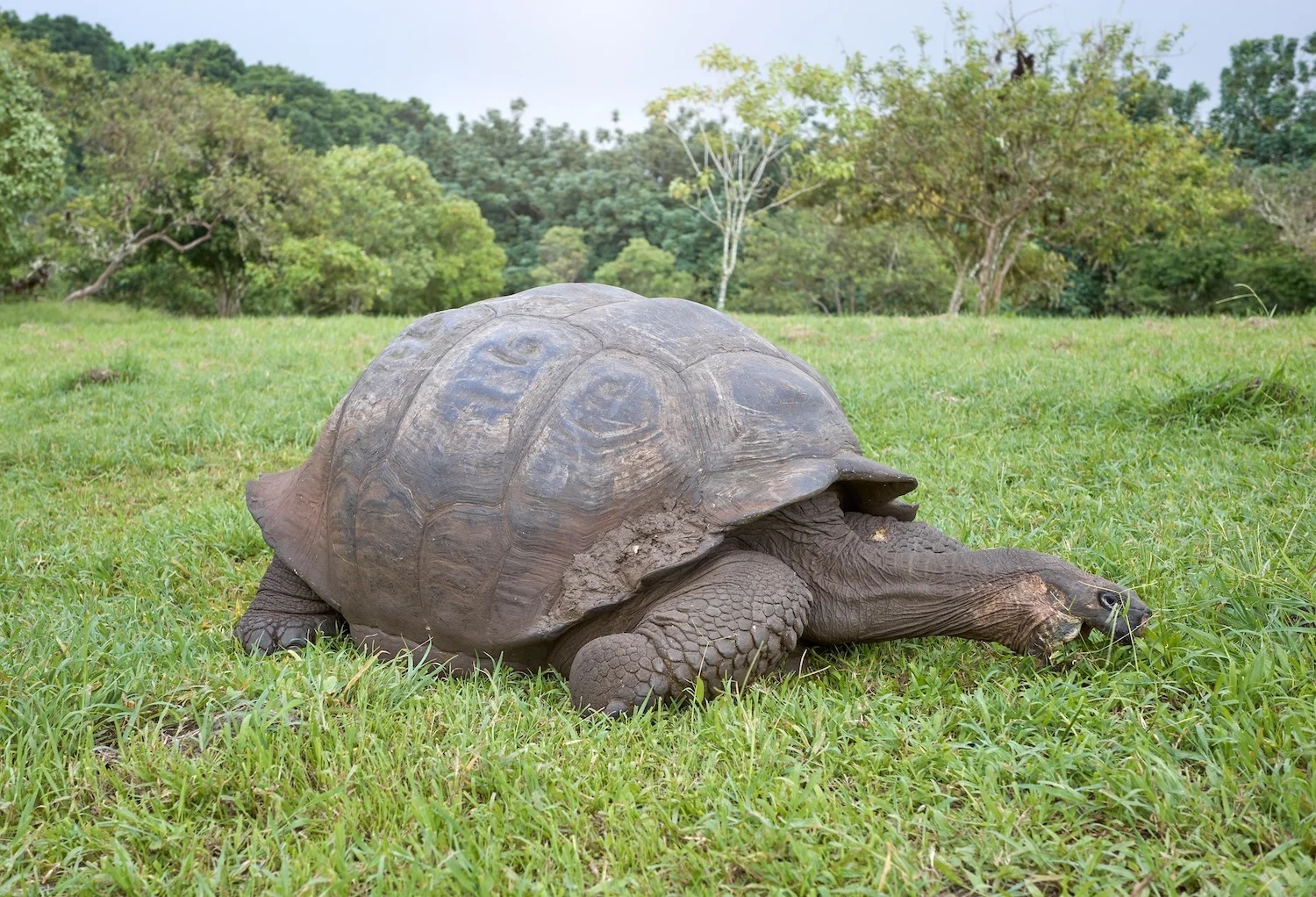


The morphological diversity of the Galapagos giant tortoise across the different islands is one of the most brilliant examples of adaptive radiation ever recorded by modern science. On larger, humid islands like Santa Cruz, where vegetation is abundant and grows close to the ground, tortoises developed heavy, dome-shaped shells that allow them to push through dense undergrowth with ease. Conversely, on smaller, arid islands where food is scarce and grows on tall cacti, populations evolved saddleback shells with a distinctive upward curve at the front, providing their long necks with the necessary vertical reach to forage high above the rocky soil. To understand how these specific physical traits differentiate them from the rest of the endemic fauna of the archipelago, exploring our comprehensive manual on the ultimate guide to Galapagos island animals will enrich your contextual knowledge before stepping foot on the islands.
Conservation Frameworks and the Protection of a Living Legend
Protecting the fragile populations of the Galapagos giant tortoise has been the central focus of global conservation efforts in Ecuador for more than six decades, reversing the devastating impacts of historical whaling and piracy. During the eighteenth and nineteenth centuries, passing ships captured thousands of tortoises as a source of fresh meat, severely depleting multiple subspecies and driving others to complete extinction. Today, the Charles Darwin Research Station and the Galapagos National Park Directorate operate highly sophisticated captive breeding programs, collecting eggs from threatened nesting zones, incubating them under controlled temperatures, and repatriating the young tortoises back to their native islands once they are large enough to survive independent of human care. This relentless dedication ensures that the historical legacy of the Galapagos giant tortoise remains intact for future generations of eco-conscious travelers.

FAQs: Understanding the Life History of Giant Tortoises
- How do these massive reptiles manage to survive for such long periods without consuming food or water? The extraordinary survival mechanism of these creatures is rooted in their incredibly slow metabolic rate, which allows them to store large amounts of energy and internal moisture within their body fat and bladder for up to a full calendar year without active consumption. This physiological adaptation was highly beneficial during the volcanic formation of the islands, enabling populations to survive prolonged periods of drought and environmental scarcity that would be fatal to mammals. When water is abundant during the wet season, they consume massive quantities of vegetation and drink heavily from temporary highland pools, fully replenishing their internal reservoirs to endure the subsequent dry months.
- What specific role does a Galapagos giant tortoise play in maintaining the ecological balance of the islands? As the primary megaherbivores of the archipelago, these giant reptiles function as vital ecosystem engineers by clearing paths through dense brush, distributing seeds across vast distances through their digestive tract, and altering the architectural structure of local plant communities. Their grazing habits prevent specific aggressive plant species from monopolizing sunlight and soil nutrients, which in turn creates open spaces that allow smaller endemic reptiles and birds to forage and build nests safely. Without the constant movement and foraging of the Galapagos giant tortoise, the complex terrestrial habitats of the islands would suffer a significant loss in biodiversity and plant structure.
- How can scientists accurately determine the gender of young tortoises during the incubation process? The gender of these unique reptiles is determined entirely by environmental factors, specifically the ambient temperature of the soil during the middle third of the incubation period rather than through genetic inheritance. At the national park breeding centers, technicians utilize this biological trait to manage population recovery by regulating incubator temperatures, keeping some nests at warmer levels to produce females and others cooler to yield males. Once the young tortoises reach approximately five years of age, their physical characteristics, such as the shape of the plastron and the length of the tail, develop sufficiently to allow for definitive visual identification.
- What are the primary natural predators that threaten the survival of these reptiles in the wild? Adult tortoises possess no natural predators on the islands due to their massive size and impenetrable bony shells, which provide total protection against the native fauna of the archipelago. However, their eggs and soft-shelled hatchlings are highly vulnerable to the Galapagos hawk, which is the only native predator capable of breaking through their early defenses during their first year of life. The greatest modern threat to young populations comes from introduced species such as feral pigs, rats, and ants, which destroy subterranean nests and prey on vulnerable newborns, making active human conservation management absolutely essential.
- What strict behavioral guidelines must international tourists follow when encountering these animals? The Galapagos National Park enforces a mandatory minimum distance of two meters between all human visitors and the native wildlife to prevent causing stress or disrupting natural behaviors. When approaching a giant tortoise, it is crucial to move slowly, avoid making sudden loud noises, and never attempt to touch their shells or feed them local vegetation. If a tortoise feels threatened by your presence, it will emit a sharp, defensive warning hiss and withdraw its head and legs into its shell, which is a clear indicator that you must step back immediately and allow the animal its necessary space.
Full Articles About Each Island in Galapagos